Overcoming the Carding Bottleneck: Optimizing Metallic Wire Geometry for Mechanical Non-Woven Scrap Reclamation (CA SB 707)
Why the July 1, 2026 California textile mandate is a mechanical engineering challenge, and how wire tooth profile design prevents high-tensile fiber loading.
The Legislative Mandate: California SB 707
Passed into law to drive absolute circularity, California's **SB 707 (The Responsible Textile Recovery Act)** establishes a first-in-the-nation Extended Producer Responsibility (EPR) program for apparel and textiles. Under this mandate, landfilling edge-trim, off-spec webs, and post-industrial synthetic scrap incurs significant regulatory liabilities and financial penalties.
For non-woven producers and textile manufacturers, this policy shifts scrap management from a logistical cost center to an immediate operational priority. To avoid massive compliance fees, plants are forced to bring mechanical scrap reclamation in-house. However, converting high-tensile, coarse synthetic scrap back into reusable fiber feedstocks exposes severe mechanical bottlenecks in standard carding lines.
Accelerated Tooth Wear
Processing recycled post-industrial scrap exposes wire teeth to high abrasive friction. High-denier polyester, polypropylene, and recycled polymers rapidly dull sharp points, altering the carding geometry and dramatically reducing the fiber transfer ratio over time.
Fiber Loading & Packing
Recycled feedstock contains high staple length variability and short-staple fibers. These inconsistent fibers drop deep into the wire gullet, building up dense, compacted mass that forces frequent line shutdowns for manual stripping.
Staple Degradation
Aggressive, unoptimized front faces on standard wire profiles smash and shear delicate recycled fibers. This structural degradation severely shortens the staple length, resulting in a low-quality web with compromised final tensile strength.
Fiber Capture & Release Dynamics
Toggle between a standard saw-tooth profile and our specialized Non-woven Geometry to visualize how tooth curve changes fiber loading.
Designing for Circularity: The Non-woven Geometry Advantage
Standard carding wire configurations often feature generic saw-tooth profiles designed for standard natural fibers. When processing recycled synthetic fibers with high denier and staple length variability, these standard geometries trap fibers, causing them to migrate to the base of the tooth. This leads to gullet loading, which stops the carding action, creates fiber neps, and forces shutdowns for manual stripping.
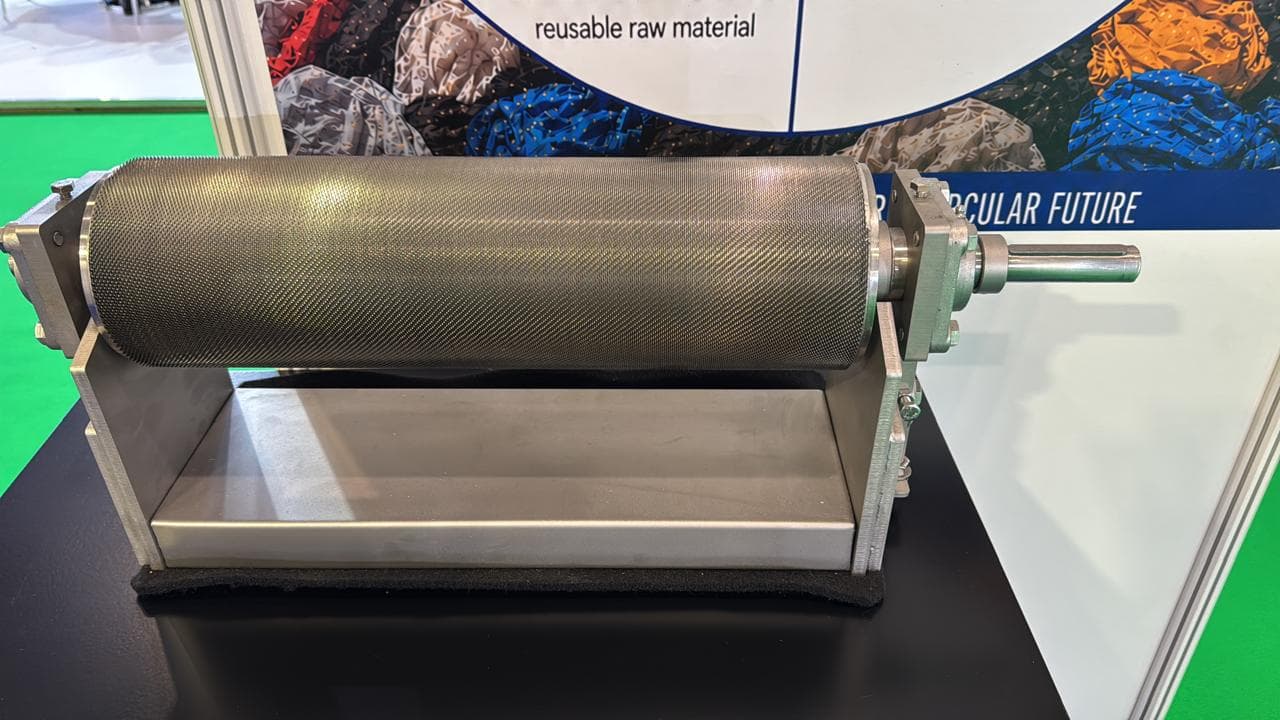
To solve this mechanical bottleneck, Garnett Wire provides our specialized **Non-woven Geometry (Worker Profile)**. Engineered with a custom curved back slope and optimized front angle, the Non-woven geometry restricts deep fiber migration. Coarse and variable synthetic fibers remain on the working tip of the tooth, ensuring continuous opening, stable transfer to the doffer, and high-efficiency carding action without clogging the gullet.